
Ebony Wood: The Dark Hardwood That Does Not Need to Shout
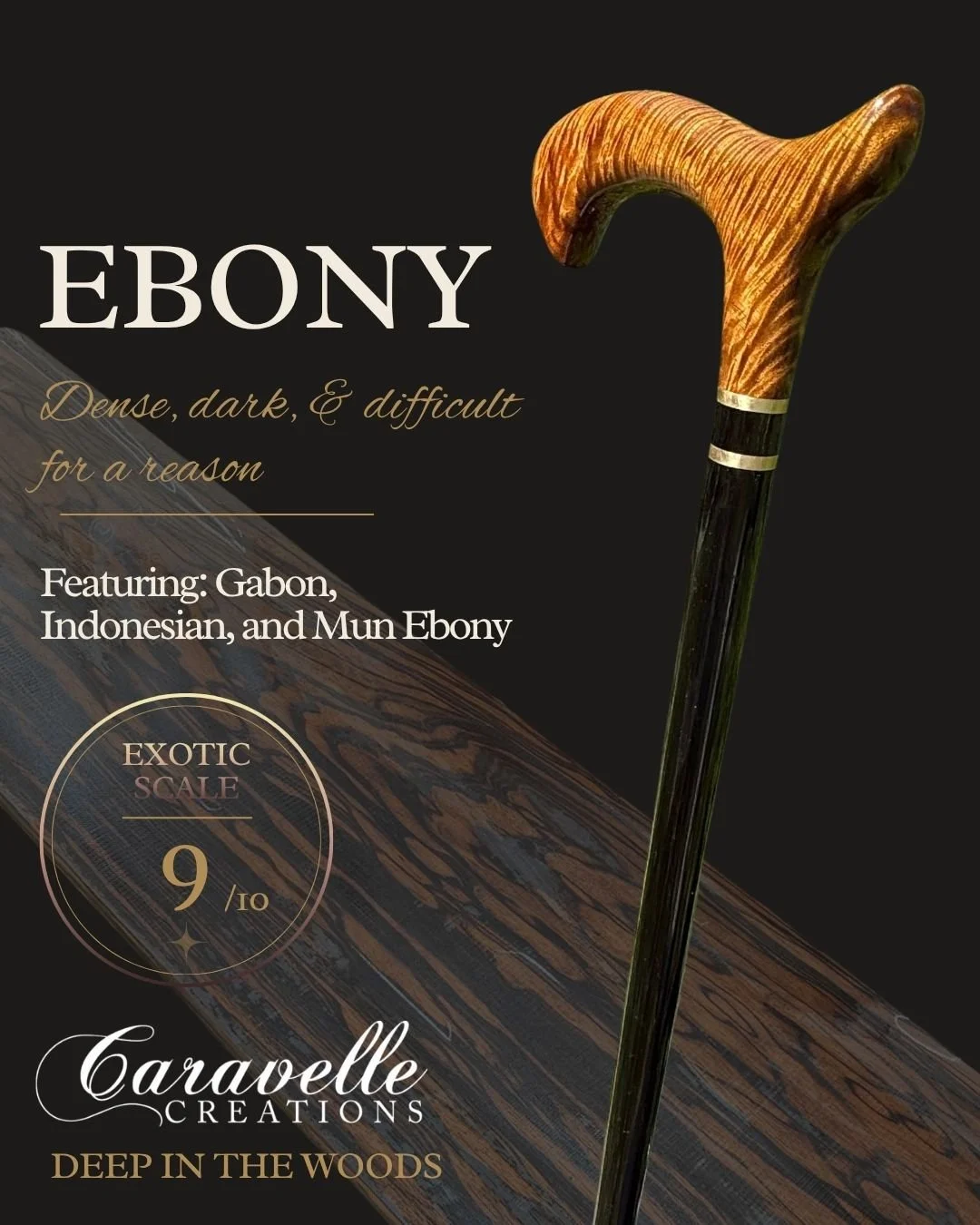
Quick Answer: What Is Ebony Wood?
Ebony is not one single look.
The word “ebony” usually refers to very dense, dark woods from the Diospyros genus, but different ebonies can look surprisingly different from each other. Some are almost jet black. Some are striped. Some are brown, black, cream, or reddish. Some are clean and formal. Some are wild enough to stop you mid-sentence.
For this post, I am looking at ebony in a few different forms:
Gabon Ebony brings the classic deep black look most people picture when they hear the word ebony.
Indonesian Ebony, often called Macassar Ebony, brings bold black and brown striping.
Mun Ebony, also called Vietnamese Ebony, brings a rich brown base with dark streaks and a tighter, more complex look.
Ebony burl brings irregular figure, eyes, contrast, and natural chaos.
That range is exactly why ebony is so useful in cane making. It can sharpen a design, darken a transition, add weight, create contrast, or bring movement depending on which type is used.
Ebony does not have one personality.
That is what makes it interesting.
Ebony Is a Family, Not a Single Look
It is easy to hear “ebony” and picture one thing: solid black wood.
That is part of the story, but not the whole story.
Ebony comes from the Diospyros genus, and different species can vary widely in color, streaking, figure, density, and personality. Some ebonies are prized because they are nearly jet black. Others are admired because they are striped, warm brown, reddish, golden, or full of irregular burl figure.
That variety matters.
When people talk about ebony, they may be talking about Gabon Ebony, Indonesian Ebony, Mun Ebony, Macassar Ebony, Ceylon Ebony, black and white ebony, or other related woods. Some are true ebonies. Some common names are used loosely in the wood trade. That is why scientific names are helpful.
Common names tell you what people call it.
Scientific names help tell you what it actually is.
Gabon Ebony: The Classic Black Ebony
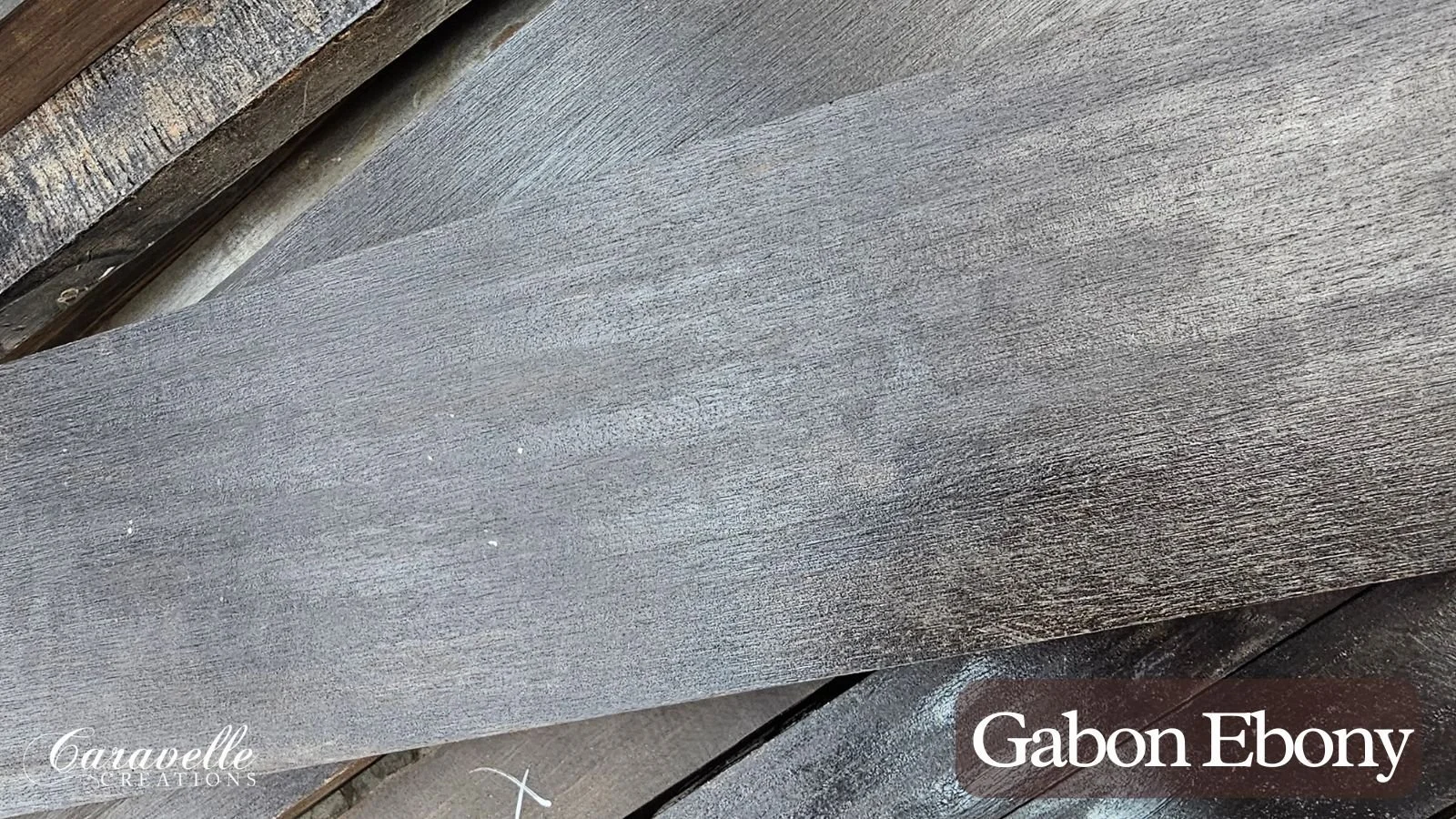
Gabon Ebony, also called Gaboon Ebony, is the classic black ebony most people picture first. Its scientific name is Diospyros crassiflora. It is dense, fine-textured, naturally dark, and capable of polishing to a deep, glassy luster.
This is the formal side of ebony.
Gabon Ebony is valued for its dark heartwood, smooth texture, and quiet authority. It does not need dramatic figure to make its point. In fact, the most sought-after pieces are often prized because they are so clean and consistently black.
That does not mean every piece is perfectly black. Natural streaking can appear, and some boards show dark brown or grayish-brown variation. But when people imagine “true black ebony,” Gabon Ebony is usually the wood they are picturing.
The Basics: Gabon Ebony at a Glance
Scientific name:Diospyros crassiflora
Common names: Gabon Ebony, Gaboon Ebony, African Ebony, Nigerian Ebony, Cameroon Ebony
Native region: Equatorial West Africa
Tree size: Often around 50 to 60 feet tall, with trunks around 2 to 3 feet in diameter
Average dried weight: About 60 pounds per cubic foot
Janka hardness: About 3,080 lbf
Color range: Usually jet-black heartwood, sometimes with dark brown or grayish-brown streaks
Grain: Usually straight, sometimes interlocked
Texture: Fine and even
Natural luster: Very high
Workability: Difficult because of extreme density
Common uses: Instrument parts, carvings, pool cues, inlay, ornamental objects, knife handles, and small specialty items
Caravelle use: Cane collars, accents, handle details, contrast elements, and featured sections when the piece calls for a dark, polished presence
Indonesian Ebony: The Striped One
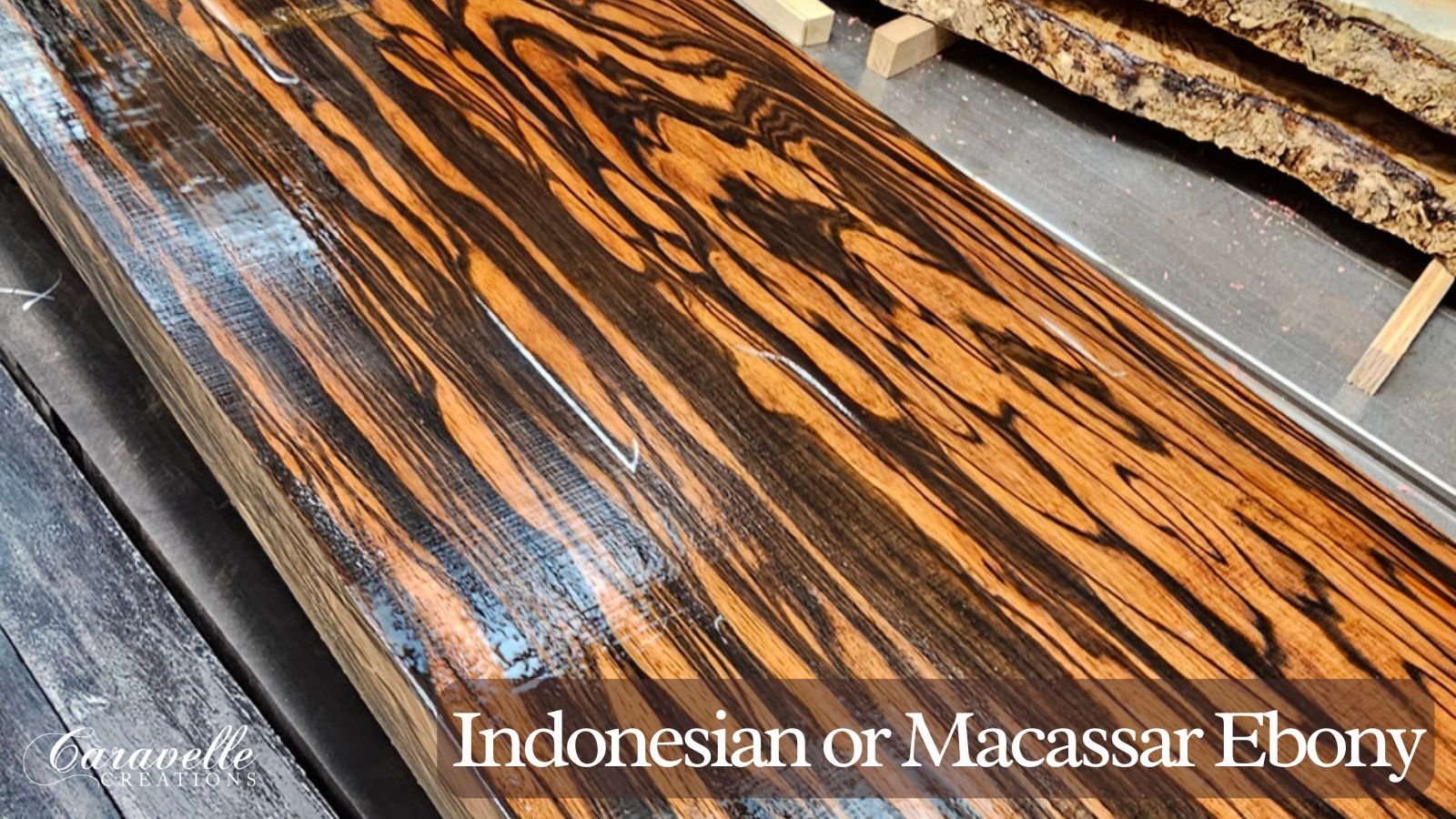
Indonesian Ebony is commonly known as Macassar Ebony. Its scientific name is Diospyros celebica, and it is famous for dramatic striping.
This is not the solid black tuxedo version of ebony.
This is the one with rhythm.
Indonesian Ebony can show long bands of black, dark brown, reddish brown, and sometimes lighter brown. The stripes give it a bold, graphic quality that feels more active than Gabon Ebony. It still has the density and polish associated with ebony, but visually, it moves in a completely different way.
That is why Indonesian Ebony is so recognizable.
Where Gabon Ebony creates a clean dark anchor, Indonesian Ebony creates direction. The stripe can feel elegant, architectural, and a little wild depending on the cut.
It is one of the best examples of why “ebony” should not automatically mean “plain black.”
Mun Ebony: The Complex One
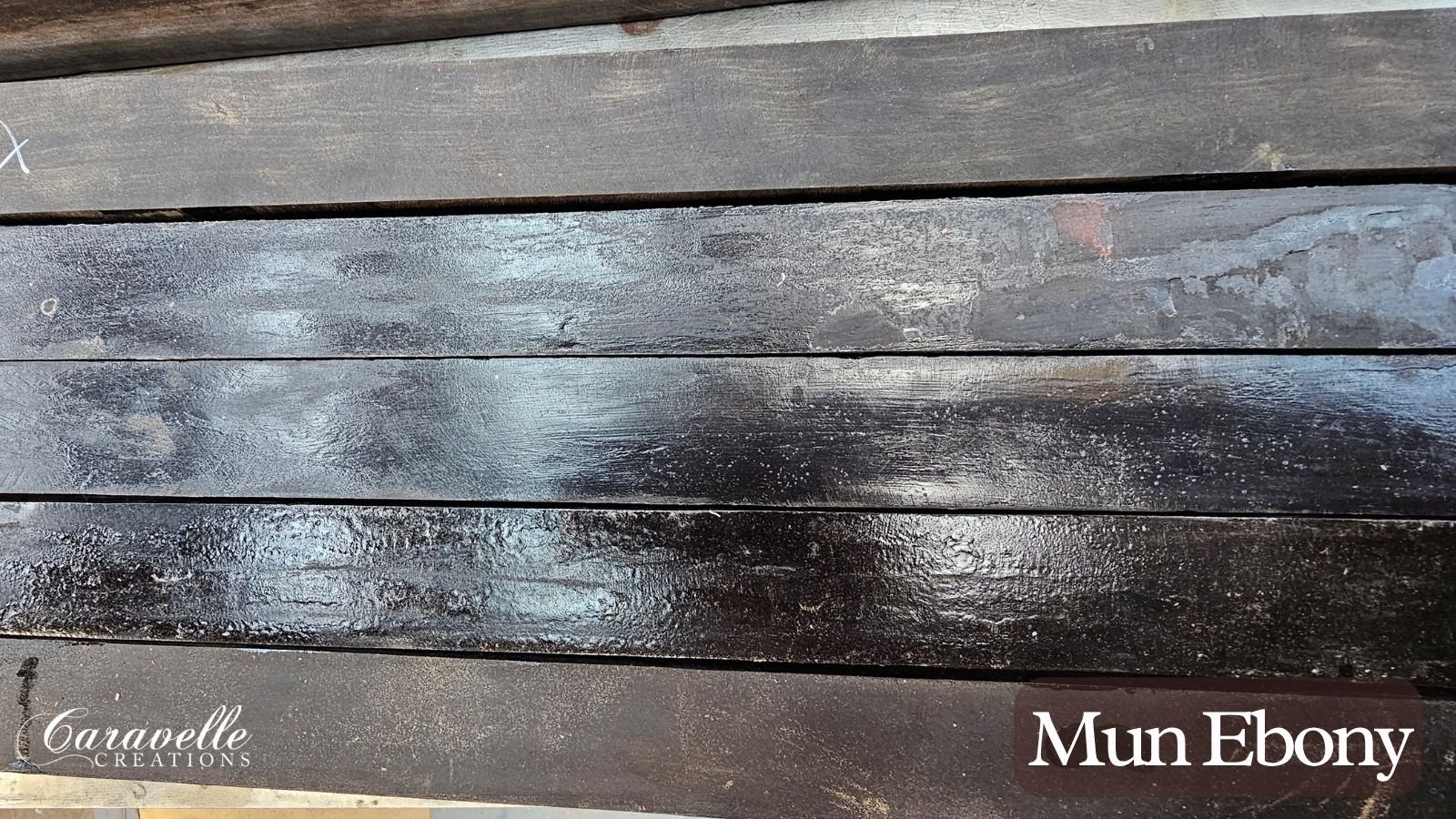
Mun Ebony, also called Vietnamese Ebony, is Diospyros mun. It is another dense, highly valued ebony, but it has its own look.
Instead of the clean black appearance of Gabon Ebony or the bold striping of Indonesian Ebony, Mun Ebony often has a medium brown to reddish-brown base with dark brown or black streaks. The figure can feel tighter, warmer, and more layered.
It is still ebony.
It just does not feel as formal.
Mun Ebony has depth. The color can move between brown, red-brown, and dark streaking in a way that feels rich without being loud. It can have a more intimate look than Gabon Ebony and a less graphic look than Indonesian Ebony.
That is what makes it special.
Mun Ebony is not trying to be the blackest wood in the room. It is more complex than that.
Ebony Burl: The Wild Card
Ebony burl is where the controlled side of ebony gives way to something more unpredictable.
Burl forms when a tree grows in an irregular way, creating twisted grain, eyes, clusters, voids, and figure that does not follow the normal rules. In ebony, that can create a mix of dark tones, brown movement, pale contrast, and unusual figure.
Ebony burl is not always jet black.
That is usually the point.
The value is in the irregularity. The eyes, swirls, pockets, and contrast give the material a different kind of presence than straight-grained ebony. It can feel older, stranger, and more organic.
Burl can also be more demanding. Depending on the piece, it may have voids, cracks, bark inclusions, or fragile areas that need stabilization or careful filling. But when it works, it brings something straight-grained ebony cannot.
Gabon Ebony brings control.
Indonesian Ebony brings stripe.
Mun Ebony brings complexity.
Ebony burl brings the plot twist.
How These Ebonies Compare
These woods are related by density, hardness, and reputation, but they are not interchangeable.
Gabon Ebony is the clean, dark, formal one. It is prized for deep black color, fine texture, and polish.
Indonesian Ebony is the striped one. It is known for bold bands of black, brown, and reddish-brown.
Mun Ebony is the complex one. It brings brown, red-brown, and dark streaking in a tighter, warmer pattern.
Ebony burl is the unpredictable one. It brings eyes, swirls, contrast, and irregular figure.
That range is what makes ebony so compelling. It can be severe, warm, bold, polished, chaotic, or refined depending on the species and cut.
The name may be simple.
The wood is not.
Why Makers and Collectors Value Ebony
Ebony has earned its reputation because it offers traits that are hard to find in one material: density, hardness, fine texture, natural luster, dramatic color, and a long history in fine objects.
It has been used in musical instruments, carving, inlay, furniture details, knife handles, pool cues, luxury objects, and other specialty work where small amounts of material can make a big visual impact.
Collectors notice ebony because it feels serious.
The weight is different. The polish is different. The color is different. Even when it is not perfectly black, it tends to have a richness that separates it from more ordinary hardwoods.
But ebony also deserves respect. Many ebony species have been heavily harvested, and some carry conservation concerns. That makes sourcing, documentation, and thoughtful use especially important.
This is not a wood to waste.
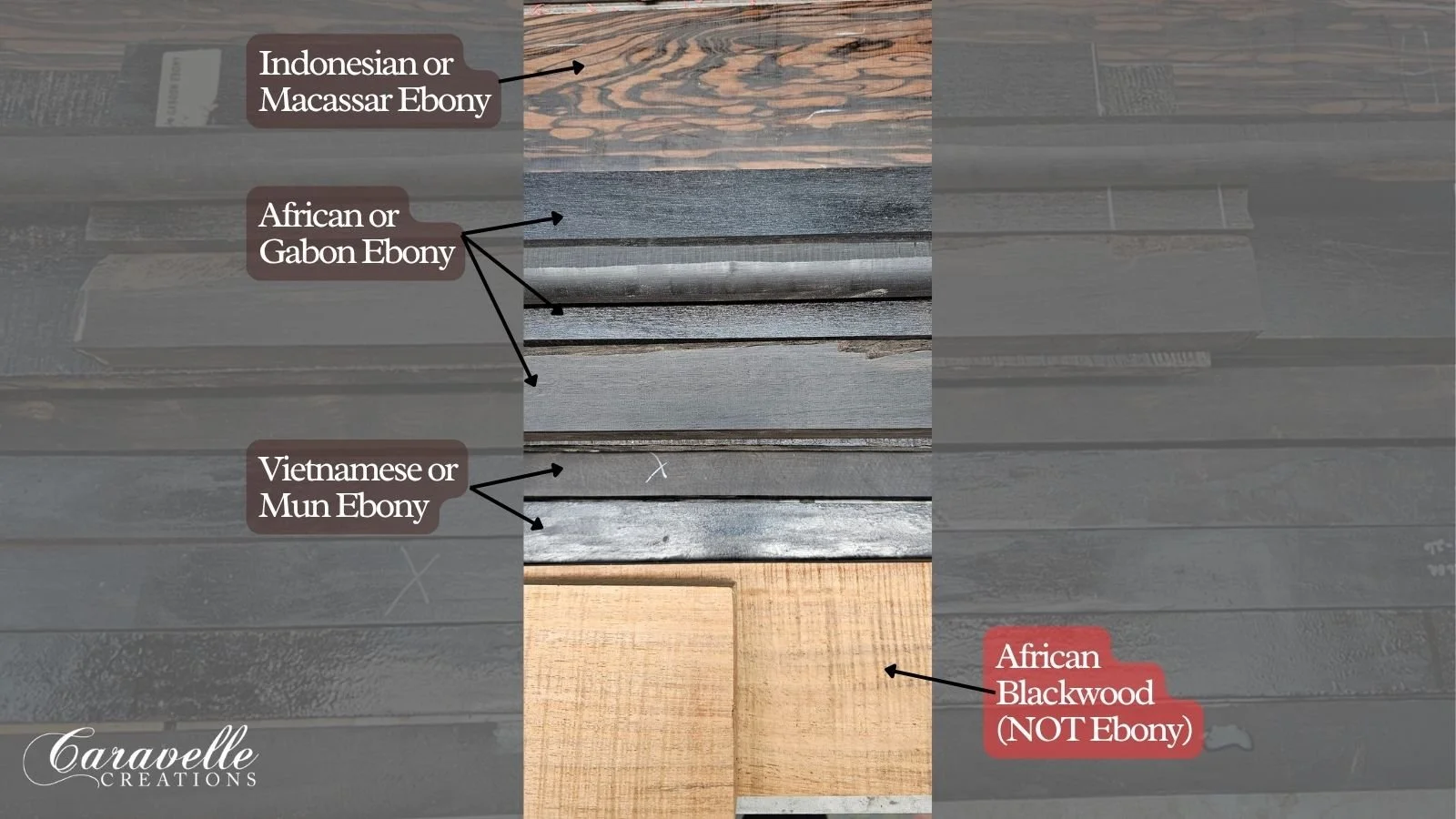
Ebony Is Not African Blackwood
This is worth clearing up because people mix these up all the time.
Ebony and African Blackwood can look similar at a glance. Both can be very dark. Both are dense. Both are expensive. Both are used in fine objects and musical instruments.
But they are not the same wood.
Gabon Ebony is Diospyros crassiflora, part of the ebony family.
African Blackwood is Dalbergia melanoxylon, part of the rosewood family.
That difference matters for identification, sourcing, workability, and honest description. “Black wood” is not the same as “ebony.” A wood can be dark without being true ebony. And sometimes “Blackwood” isn’t even black.
If I call something ebony, I want that name to mean something.
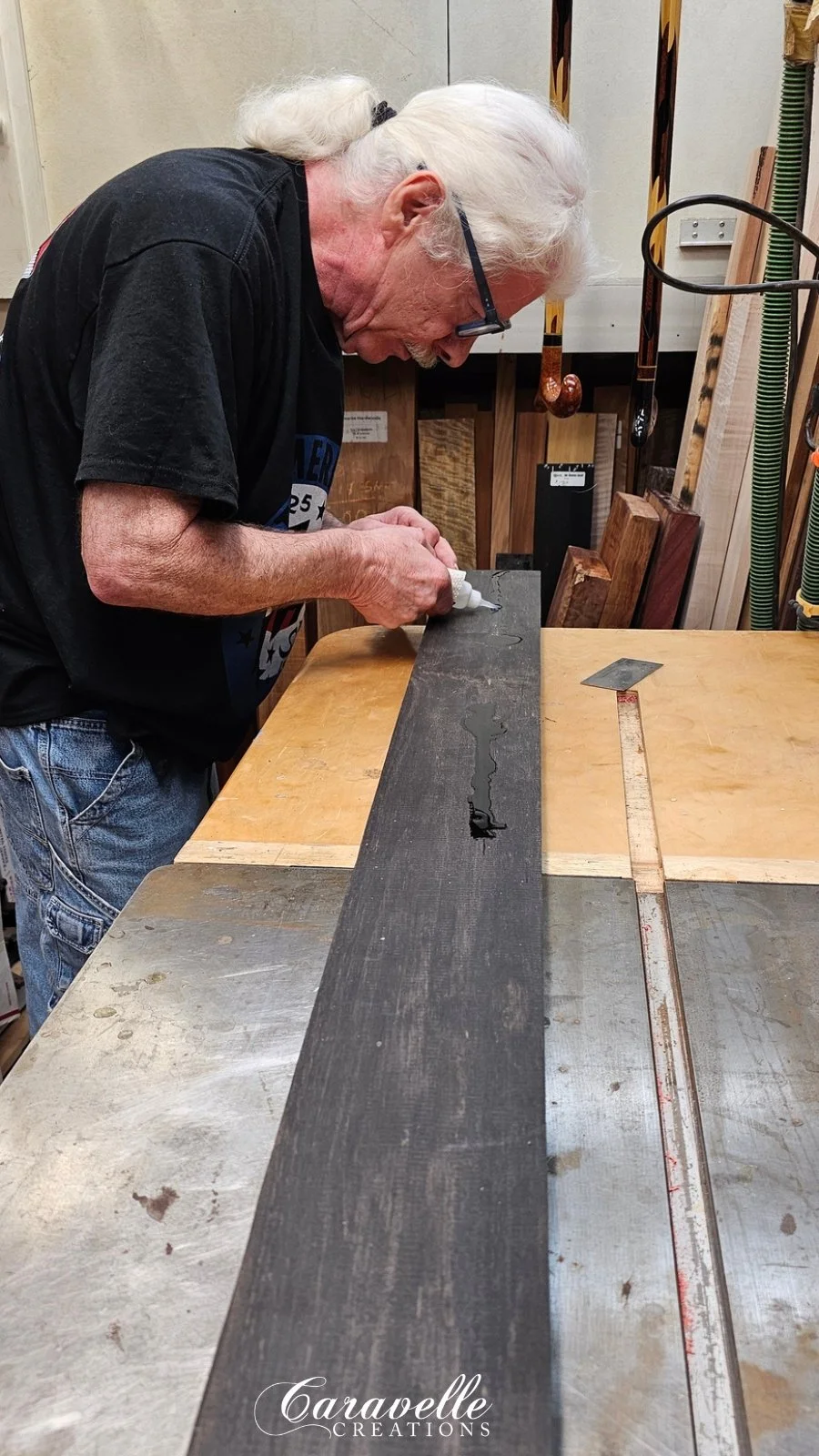
Working With Ebony
Ebony is not beginner-friendly wood.
It is extremely dense. It is hard on cutters. It can be slow to shape. It can burn if you are not paying attention. If the grain is interlocked or irregular, tearout can happen. It also has natural oils that can make gluing more demanding.
Basically, it is not impressed by your confidence.
That is one reason I tend to respect it. Ebony makes you slow down. Sharp tools matter. Clean cuts matter. Sanding matters. Fit matters. Patience matters.
The reward is the finish.
Ebony can polish to a deep, glassy luster that few woods can match. It does not need stain to look expensive. It already is expensive. The goal is to bring out what is there without making it look artificial.
When it is done right, ebony has depth without decoration.
Why Ebony Is Expensive
Ebony is expensive for a few reasons.
The trees are not huge compared to many timber species. The usable black heartwood can be limited. Demand has been high for centuries. It is valued in musical instruments, luxury objects, carving, inlay, and specialty woodworking. And because the best pieces are dark, dense, and clean, the selection process can be unforgiving.
A lot of wood may be cut before a perfect black piece appears.
That history has consequences.
Ebony has been heavily exploited in many regions, and responsible sourcing matters. Some ebony species are threatened, vulnerable, or regulated depending on species and origin. Gabon Ebony itself has conservation concerns, so I do not treat it like ordinary shop stock.
This is not a wood to waste.
For small custom work, that makes the material more meaningful. A collar, accent, or handle detail can use ebony in a way that honors its value without pretending there is an endless supply.
A Note on Sourcing and Responsibility
Exotic woods come with responsibility.
That does not mean every piece of ebony is automatically off-limits. It does mean the source matters, the supplier matters, and the way the material is used matters.
I am not interested in using rare wood just because it sounds impressive. The piece has to earn its place in the design.
With ebony, that usually means using it where its natural properties actually matter: contrast, density, polish, durability, and presence.
The goal is not to show off that a cane has ebony in it.
The goal is to make a cane where ebony was the right choice.
What to Look For in an Ebony Piece
If you are looking at a cane or custom object that includes ebony, pay attention to:
Species: Gabon Ebony, Indonesian Ebony, Mun Ebony, and ebony burl all bring different color, figure, and value.
Color: Ebony can be jet black, dark brown, reddish brown, striped, streaked, or mixed depending on the species.
Texture: Many true ebonies have a fine, even texture that can polish beautifully.
Density: Ebony is usually very dense, which affects weight, workability, and feel.
Striping: Indonesian Ebony is especially known for dramatic dark brown and black stripes.
Streaking: Mun Ebony often has a warmer brown base with darker streaks, giving it a layered look.
Figure: Ebony burl should be judged differently than straight-grained ebony. The irregularity is part of the appeal.
Sourcing: Ebony is valuable and sometimes conservation-sensitive, so responsible sourcing matters.
Ebony in One Sentence
Ebony is a dense, dark hardwood prized for its near-black heartwood, fine texture, high polish, and ability to bring sharp contrast and quiet authority to a custom piece.
Or, to put it more simply:
Ebony is the tuxedo of the wood rack.
But only if you cut it clean.
Ebony is not the wood I reach for when a piece needs noise. It is the wood I reach for when the design needs contrast, polish, weight, and restraint. Used well, it does not just darken a cane. It sharpens the whole thing.
Frequently Asked Questions About Ebony Wood
-
No. Some ebony, like high-grade Gabon Ebony, can be nearly jet black. Other ebonies are striped, streaked, brown, reddish, or mixed in color. Indonesian Ebony and Mun Ebony are good examples of ebony woods that can have strong brown and black movement instead of a solid black appearance.
-
Yes, in most woodworking contexts, Gabon Ebony and Gaboon Ebony refer to the same wood: Diospyros crassiflora. “Gaboon” is the spelling commonly used by many wood references, while “Gabon” is also widely used in trade and casual conversation.
-
Indonesian Ebony is commonly known as Macassar Ebony. It comes from Diospyros celebica and is known for bold dark brown and black striping. It is dense, hard, and visually more active than solid black ebony.
-
Mun Ebony, also called Vietnamese Ebony, is Diospyros mun. It is a dense ebony with a medium brown to reddish-brown base and dark brown to black streaking. It has a fine texture and high natural luster.
-
Gabon Ebony has a Janka hardness of about 3,080 lbf, making it much harder than many common domestic hardwoods. Its density is one reason it feels so substantial and can polish to such a high luster.
-
Ebony heartwood naturally develops a very dark color, often close to jet-black. Some pieces may also show dark brown or gray-brown streaks. The color is natural when the wood is true ebony, not simply the result of dye.
-
Yes, ebony can be excellent in custom canes when used thoughtfully. Because it is dense and heavy, it often works best as a collar, accent, handle detail, or contrast element rather than being used without restraint.
-
Ebony burl is ebony wood with irregular burl figure. Instead of straight, clean grain, burl can show swirls, eyes, voids, and unusual movement. It is often more unpredictable than regular ebony and may require extra care when shaping or finishing.
-
No. Ebony burl may include black, brown, cream, golden, or mixed tones depending on the piece. Burl figure is prized for its irregularity, so the most interesting pieces are not always the most uniform.
-
No. Gabon Ebony is Diospyros crassiflora. African Blackwood is Dalbergia melanoxylon. They can both be very dark and dense, but they come from different botanical groups and should not be described as the same wood.
-
Ebony is expensive because it is dense, slow-growing, highly valued, often available only in smaller pieces, and historically overharvested. Clean, dark, high-quality material is especially prized.
-
Value depends on the species, color, figure, size, quality, sourcing, and rarity of the specific piece. Uniform black Gabon Ebony can be highly prized, while dramatic Indonesian Ebony, rare Mun Ebony, and unusual ebony burl can also be very valuable.
-
Some ebony species are threatened, vulnerable, or regulated depending on species and origin. Gabon Ebony has conservation concerns, so responsible sourcing and careful use matter.