
How to Size a Cane Properly

A cane can be beautifully made, perfectly balanced, and built from an extraordinary piece of wood, but if it is the wrong length for the person using it, none of that matters quite as much.
Proper cane sizing affects posture, comfort, balance, and the amount of useful support the cane can provide. A cane that is too tall can force the shoulder upward and make the arm work at an awkward angle. One that is too short can encourage leaning or reaching downward with every step.
Fortunately, getting the right measurement is pretty simple.
What Is the Proper Height for a Walking Cane?
For most people, the top of the cane handle should sit approximately level with the crease of the wrist when standing naturally with the arms relaxed at the sides.
When the hand is placed on the cane, the elbow should have a slight bend, roughly 15 to 20 degrees. Cleveland Clinic specifically recommends positioning the handle at the wrist crease with about a 20-degree bend in the elbow.
That slight bend matters. The goal isn't to create a rigid arm or a cane that props the body up. It should allow the user to stand comfortably upright while naturally putting pressure through the hand when support is needed.
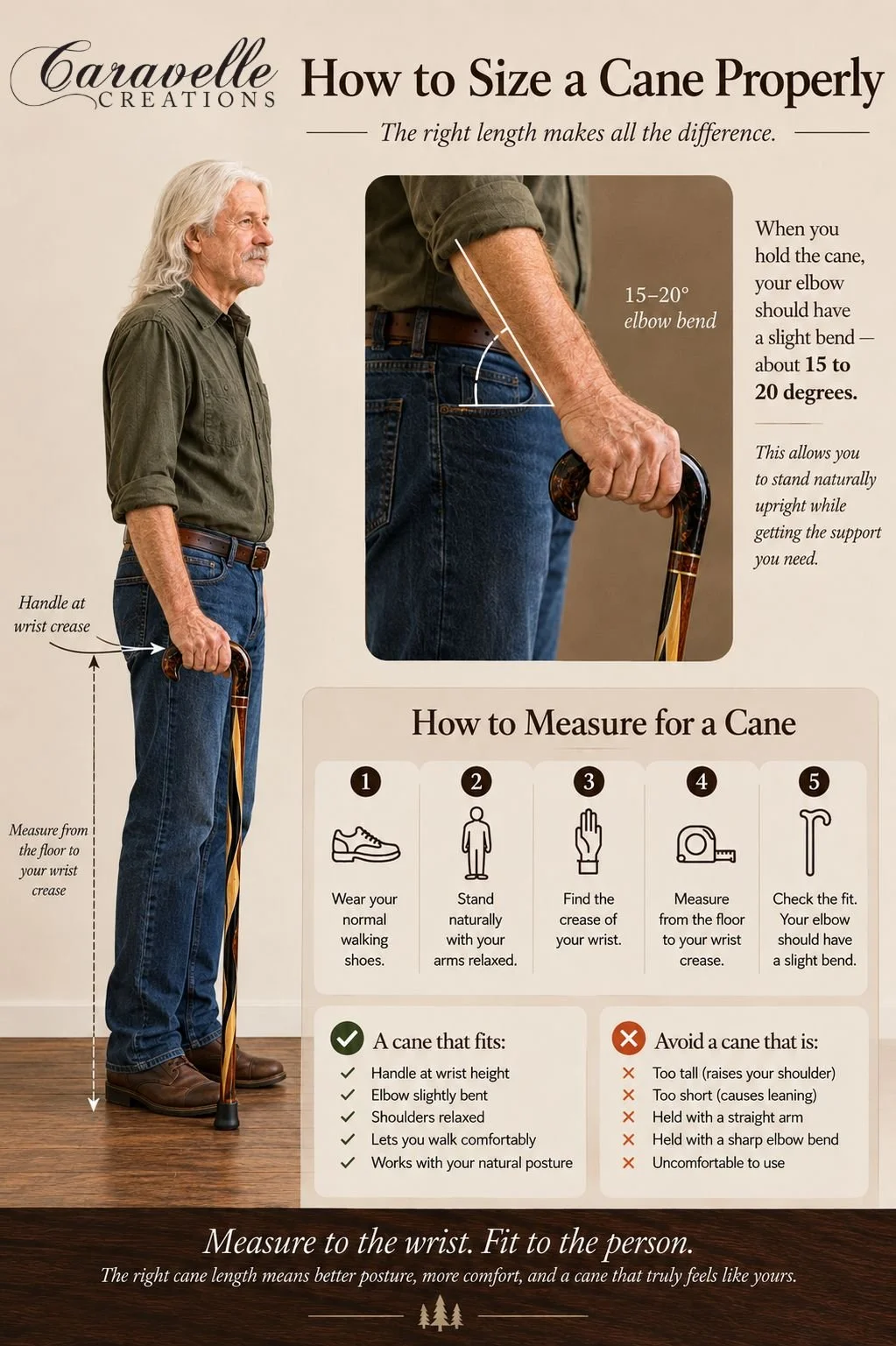
How to Measure for a Cane
The best measurement is taken from the person who will actually be using the cane.
Step 1: Put on your normal walking shoes
Measure while wearing the shoes you normally expect to wear with the cane.
Shoes can change your standing height enough to affect the final measurement, especially when comparing a thin-soled shoe with a boot or thicker walking shoe.
Step 2: Stand naturally
Stand upright on a level surface.
Don't stretch yourself taller than normal and don't intentionally slouch. Your shoulders should be relaxed and your arms should hang comfortably at your sides.
Step 3: Find the wrist crease
Look at the inside of the wrist where the hand meets the forearm.
The cane handle should generally line up with this crease. This wrist-height method is also used by clinical sources when fitting walking aids.
Step 4: Measure from the floor to the wrist crease
Have someone measure vertically from the floor to the wrist crease.
That measurement is your starting cane length.
For example:
Floor to wrist crease = 36 inches
A cane approximately 36 inches long would generally be the appropriate starting point.
Step 5: Check the elbow angle
The measurement should still be checked once the cane is in hand.
With the cane beside you and your hand resting naturally on the handle, your elbow should remain slightly bent rather than completely straight or sharply bent.
If your shoulder lifts when you grip the cane, it is probably too tall.
If you have to lean or reach downward to use it, it is probably too short.
Can You Determine Cane Length From Your Height?
You've probably seen charts that say something like:
Take your height and divide it by two.
For example, someone who is 6 feet tall might be told to buy a 36-inch cane.
That can provide a rough estimate, but I wouldn't use it as the final measurement for a custom cane.
Two people who are exactly the same height can have very different proportions. Arm length, leg length, torso length, posture, footwear, and even the way someone naturally carries their shoulders can change where their wrist falls.
Research examining cane-fitting methods has also found that using standing height alone isn't reliable enough to determine the ideal cane length for an individual.
If you're ordering a cane made specifically for you, taking the extra minute to measure from the floor to your wrist crease is worth it.
What Happens if a Cane Is Too Tall?
A cane that is too tall may cause the user to:
Raise or shrug the shoulder while walking
Bend the elbow excessively
Hold the arm farther away from the body
Have difficulty putting useful downward pressure through the cane
Develop unnecessary strain through the shoulder, arm, or wrist
It can also interfere with the natural rhythm of walking.
A properly fitted cane should work with your movement rather than forcing your body to adapt to the cane.
What Happens if a Cane Is Too Short?
A cane that is too short can be just as problematic.
The user may compensate by:
Leaning toward the cane
Bending forward
Dropping one shoulder
Reaching downward with each step
Putting the wrist into an uncomfortable position
Over time, that can make something intended to provide support create additional discomfort instead.
Does Cane Handle Style Affect the Measurement?
The important measurement is the height at which your hand actually rests on the handle, not simply the overall length of the piece of wood.
That's especially important with handcrafted canes because handle designs can vary considerably.
A Derby-style handle, Fritz-style handle, palm grip, crook handle, or sculpted custom handle may position the hand differently. Cleveland Clinic notes that handle design also affects grip comfort and how pressure is distributed through the hand and wrist.
When I build a cane, the useful measurement is therefore the finished grip height from the floor, not an arbitrary shaft length.
Should You Measure With or Without the Cane Tip?
The finished measurement should include the cane tip or ferrule that will actually be installed.
The rubber tip adds a small amount of height, and that becomes part of the finished cane.
It may not seem like much, but when a cane is being built to a specific measurement, those small details count.
Which Side Should You Carry a Cane On?
If a cane is being used because one leg or side of the body is weaker or painful, it is generally held in the hand opposite the affected side.
For example:
Weak or painful right leg → cane in the left hand
The cane moves forward with the weaker leg, helping share the load and provide stability.
If the cane is primarily being carried for occasional balance rather than a specific weaker side, which hand feels most natural may depend on the individual.
What If You Already Own a Cane That Is Too Long?
A solid wood cane can often be shortened from the bottom, depending on its construction.
Before cutting anything, however, measure carefully with the intended tip installed or account for the height of the tip that will be added afterward.
And remember the old workshop rule:
You can always take more wood off. You can't put it back.
Start conservatively, check the fit, and shorten again if necessary.
The Best Cane Length Is the One That Fits You
There are plenty of cane sizing charts online, and they can be useful for getting into the right neighborhood.
But a handcrafted cane isn't an off-the-rack object.
If I'm making something specifically for one person, I'd rather work from that person's actual measurement than a number estimated from their height.
Wear your normal shoes. Stand naturally. Let your arms relax. Measure from the floor to the crease of your wrist.
That little measurement makes a very big difference in how the finished cane feels in your hand.
Already Have a Cane That Fits?
If you already own a cane that feels comfortable and fits you well, you can skip the measuring process and simply measure the cane you already have. Measure from the floor to the top of the handle where your hand rests, including the cane tip. That finished height gives you an excellent reference for sizing your next cane.
Frequently Asked Questions About Cane Sizing
-
The handle should generally line up with the crease of your wrist when you're standing naturally with your arms relaxed at your sides. When holding the cane, your elbow should have a slight bend of approximately 15 to 20 degrees.
-
Wear your normal walking shoes, stand upright with your arms relaxed, and measure from the floor to your wrist crease. Use that measurement as your starting cane height.
-
Half your height can provide a rough estimate, but it isn't the best way to size a cane for an individual. People of the same height can have different body proportions, so measuring directly to the wrist crease is more accurate.
-
Your elbow should be slightly bent when your hand is resting on the cane. Approximately 20 degrees is commonly recommended.
-
Yes. Measure while wearing the type of shoes you normally expect to wear while using the cane.
-
Neither is ideal. A cane should be fitted so you can stand naturally with the handle at approximately wrist height and a slight bend in the elbow. If you're between sizes on a cane that can be shortened, starting slightly longer allows the cane to be trimmed after the fit is checked.